“Bruno de Maistre, a Cabinetmaker in the Service of the Sacred” – Aleteia – 4 November 2022
Bruno de Maistre, a Cabinetmaker in the Service of the Sacred
Caroline Becker – published 04/11/22
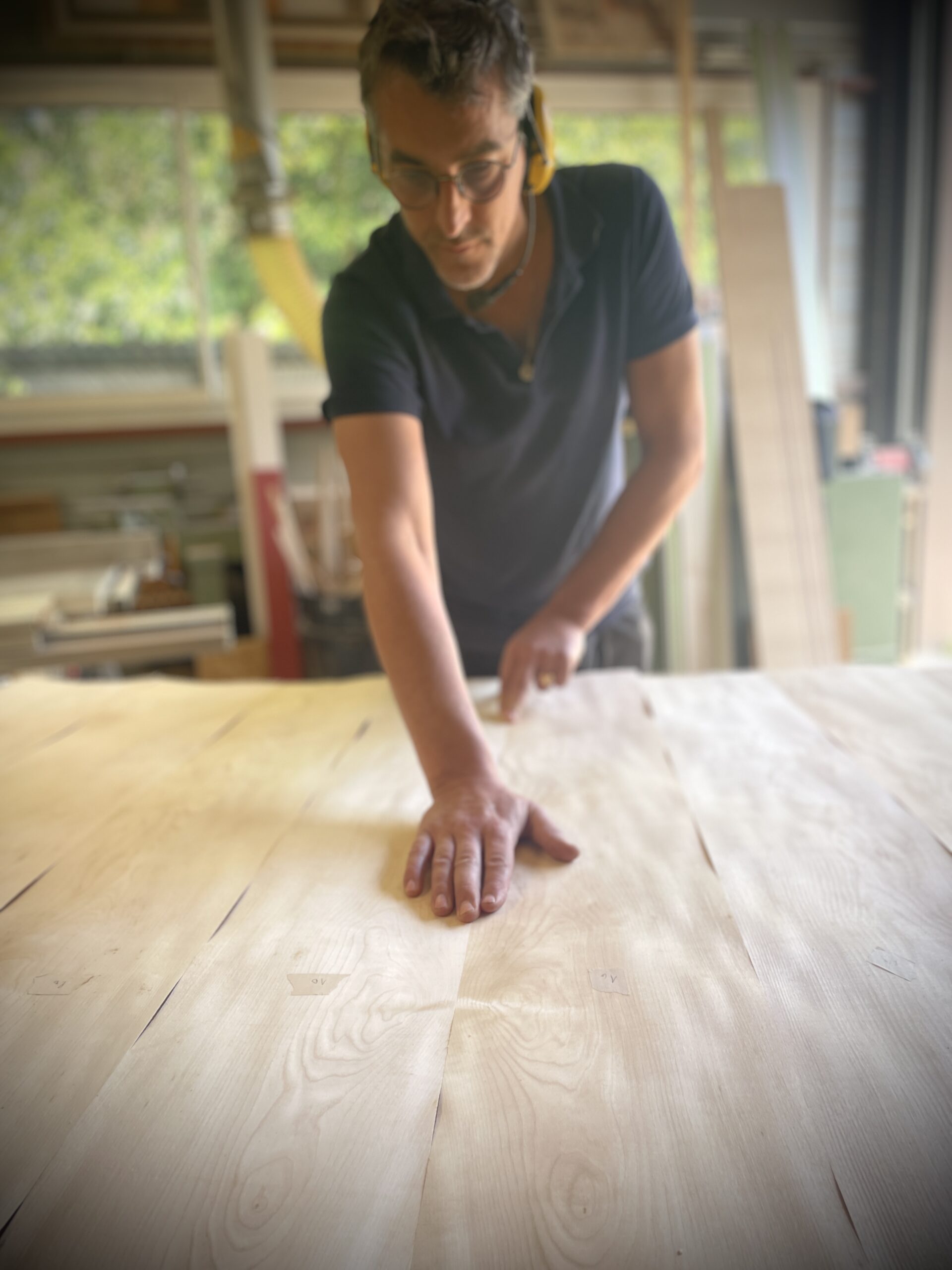
A talented cabinetmaker, Bruno de Maistre founded the Ateliers d’Arimathie ten years ago and today devotes a large part of his work to liturgical furnishings. He shares with Aleteia his unusual journey, which led him from an advertising agency to founding his own cabinetmaking workshop.
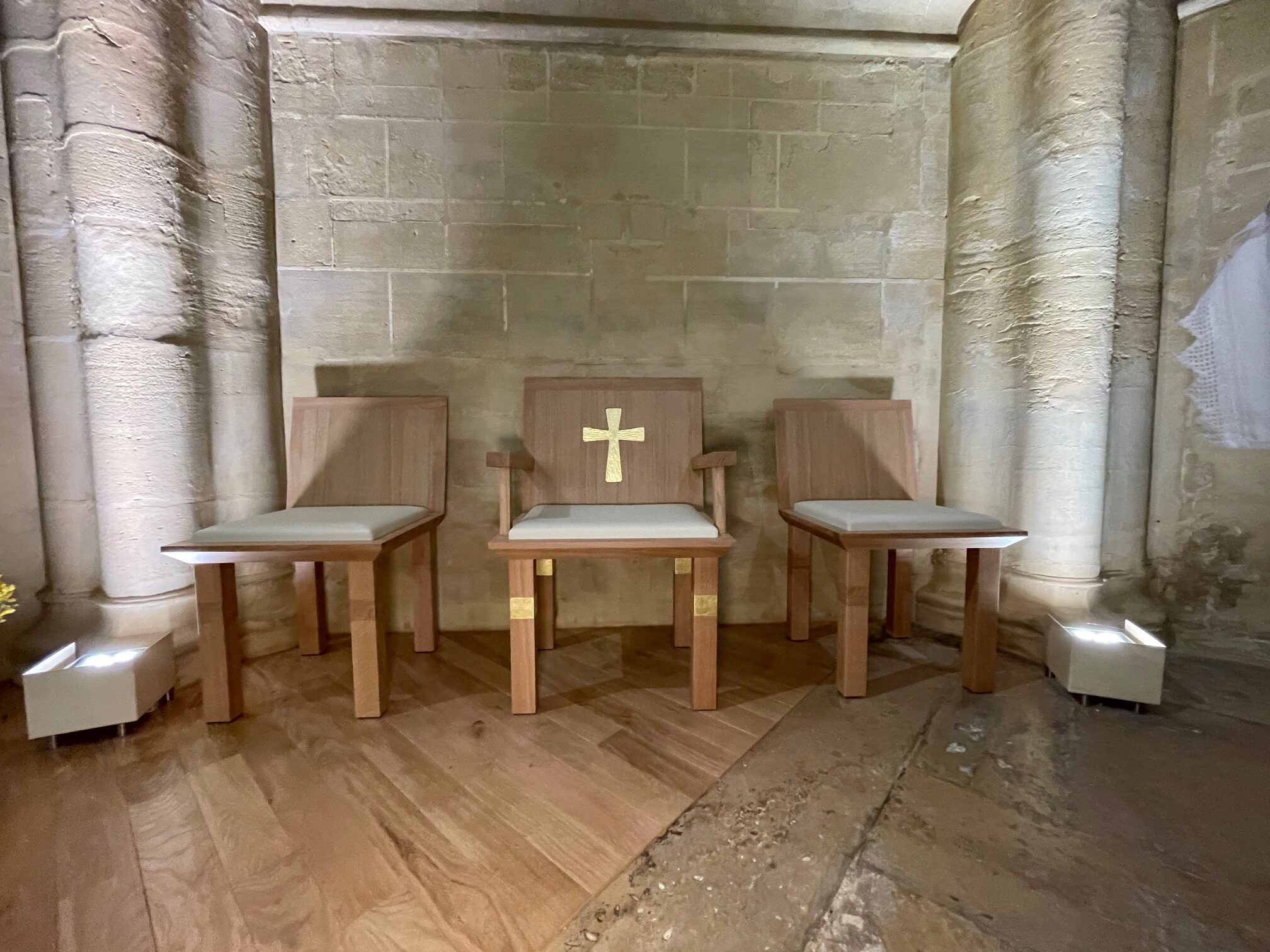
‘It all began with a questioning of my life,’ Bruno de Maistre begins, as he recounts the beginnings of the Ateliers d’Arimathie which he founded in 2011. Since then, commissions have been plentiful, and the success of this young cabinetmaker shows no sign of waning, as witnessed by his recent major creations for the Chapel of Sainte-Clotilde in Versailles and the Church of Notre-Dame de Boulogne. As early as 2016, he was named laureate of the Prix Pèlerin for contemporary creation for the Chantiers du Cardinal, with an ensemble created for the Saint John Paul II Parish House in Colombes (Diocese of Nanterre). ‘I worked on this creation with a phrase of John Paul II that touches me particularly: “If you are what you should be, you will set the whole world on fire.”’
De la publicité à l’ébénisterie
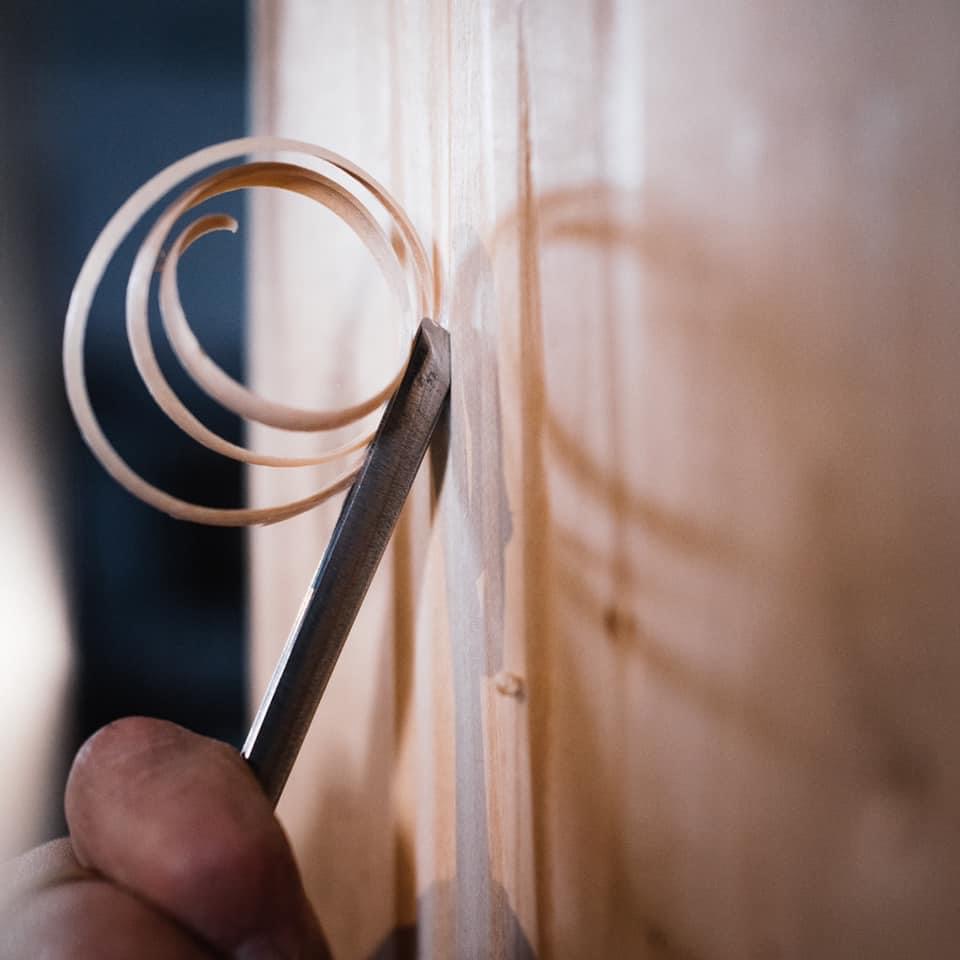
Trained at Penninghen, an art school, and then in a communications agency, Bruno de Maistre began his professional life in advertising — an almost ready-made path for a young professional who enjoyed his work. But one day, the cord snapped. Suffering from burn-out, Bruno de Maistre took the opportunity to ask himself real questions about his profession, his future and his desires. ‘A dimension was missing,’ he confides. After a period of rest, he decided to look for work again in communications, in London. There he found a small job as a technician in a hotel — a revelation for the young man, who discovered the simple pleasure of working with his hands. ‘I changed light bulbs, did plumbing… and I loved it! The manual side appealed to me enormously; it was like a game. I was thinking not only with my intellect but with my hands too.’
Cabinetmaking then became self-evident, and from there everything followed. Bruno de Maistre enrolled at the École Boulle in 2009 for a two-year course, learning its techniques and gestures. His wish to turn to liturgical furnishings had not yet blossomed, and yet a course he had followed alongside his years in communications speaks volumes. ‘When I was an employee, I took a degree in Sacred Art at the Institut Catholique de Paris. I don’t really know why. I came across it by chance and did it; I needed to. It was no doubt Providence…’ he reflects with hindsight.
When I carry out simple tasks that do not require deep concentration, I begin to pray — for the client, or for all those who will be in the presence of the furnishings.
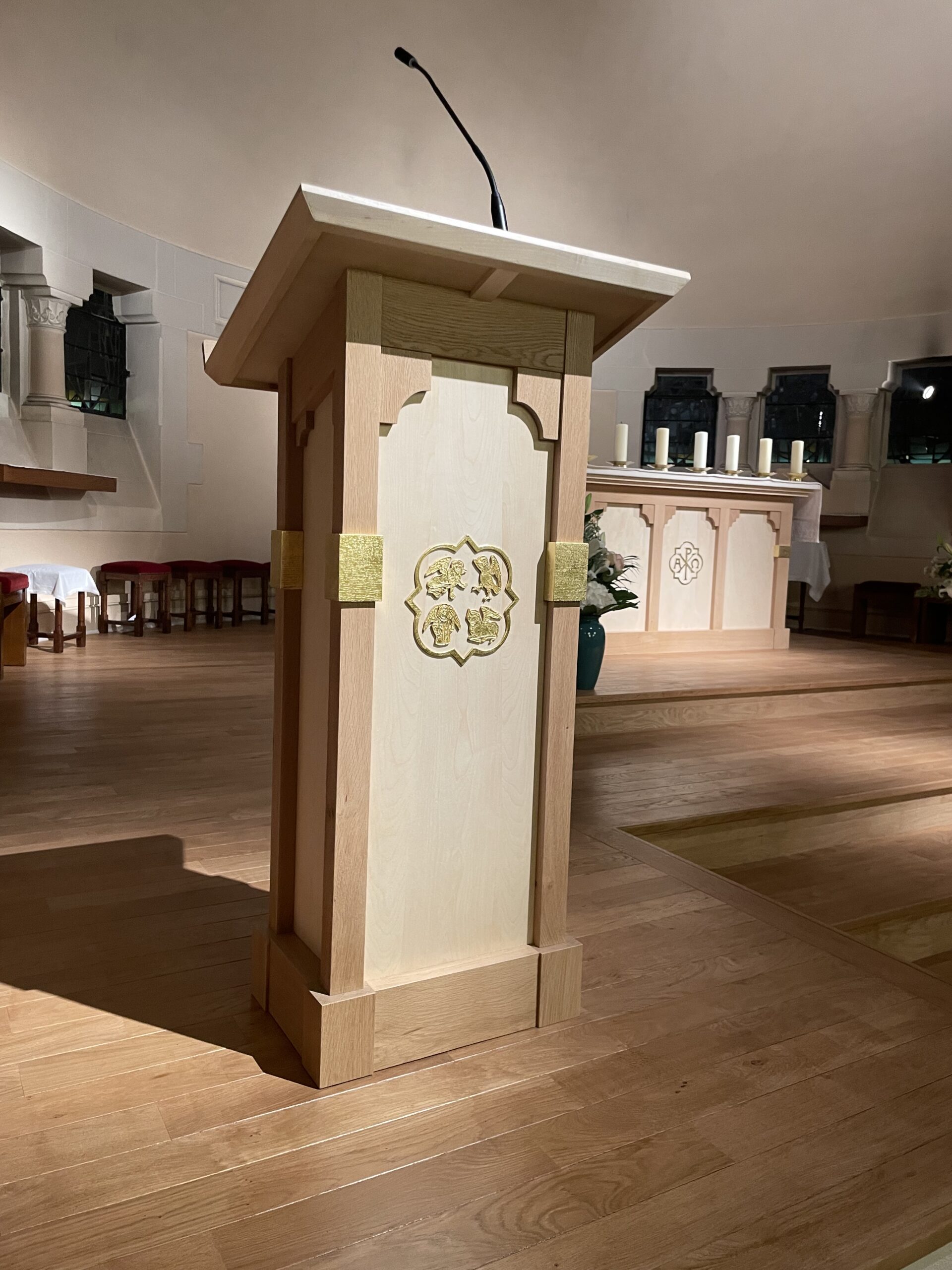
Then came his first experience of Sacred Art, somewhat by chance. Serving as a host family with his wife in the Diocese of Nanterre, and living at the presbytery for this voluntary mission, Bruno de Maistre knew the parish priest well. The priest asked him to design an ambo. Over time, the projects grew in scope; from the ambo, Bruno moved on to complete reorderings. His first project was for the Church of Saint-Denys in Vaucresson, where he made the altar, lecterns, seats, platform and cross on the theme of the miraculous draught of fishes. ‘When I accepted this project, I saw a precipice,’ he recalls with emotion. Loving to take risks, Bruno designed complex furnishings in which inlaid fillets of wood radiate towards the cross. ‘I thought I was incapable of making what I had drawn! Fortunately, Saint Joseph came to the rescue.’
‘Saint Joseph is a colleague’
Patron of artisans, Saint Joseph holds a special place in Bruno’s heart. ‘He’s a colleague,’ he says with a laugh. ‘He’s always in the workshop to lend me a hand.’ A believer all his life, Bruno lets himself be guided by faith, which is ever-present in his work. ‘When I carry out simple tasks that do not require deep concentration, I begin to pray — for the client, or for all those who will be in the presence of the furnishings.’ Prayers addressed to Saint Joseph and the Virgin Mary are sometimes mingled with song. ‘I say personal prayers, I recite Hail Marys, des Our Fathers… sometimes I sing out loud without even noticing!’ When he needs calm, Bruno puts on music or listens to the poems of Saint Thérèse of Lisieux, whose freshness and simplicity he admires. ‘Thérèse tinges my works with gentleness and femininity,’ he says.
Dividing his time between secular commissions and sacred art, Bruno admits that he does not feel the same when making works destined for the glory of God. ‘When I work on a liturgical object, I am in pursuit of perfection. I will refine details that are entirely invisible, even useless. But God sees everything. My client is the Lord! It is an effort I make in secret. It is my own prayer.’
Drawing his inspiration directly from churches, and testing his ideas with parish priests, parish teams and the faithful, Bruno de Maistre loves to work in close collaboration with all who will use and see the furnishings. ‘When I create liturgical furniture, I seek to touch those who go to church. I want to invite them to pause before the Blessed Sacrament, to be carried by God, so that their heart may say “Lord, here I am.”’ This collective work is an inexhaustible source of inspiration for an artist who cannot imagine sailing alone. ‘I am an artisan; I place myself at the service of God, of the priest, of everyone. I do not make a work for myself but for the community.’ Sitting quietly in the church, taking part in the celebrations, absorbing the history of the place and questioning the teams are among the small rituals that ‘feed the creative pot’, as he puts it.
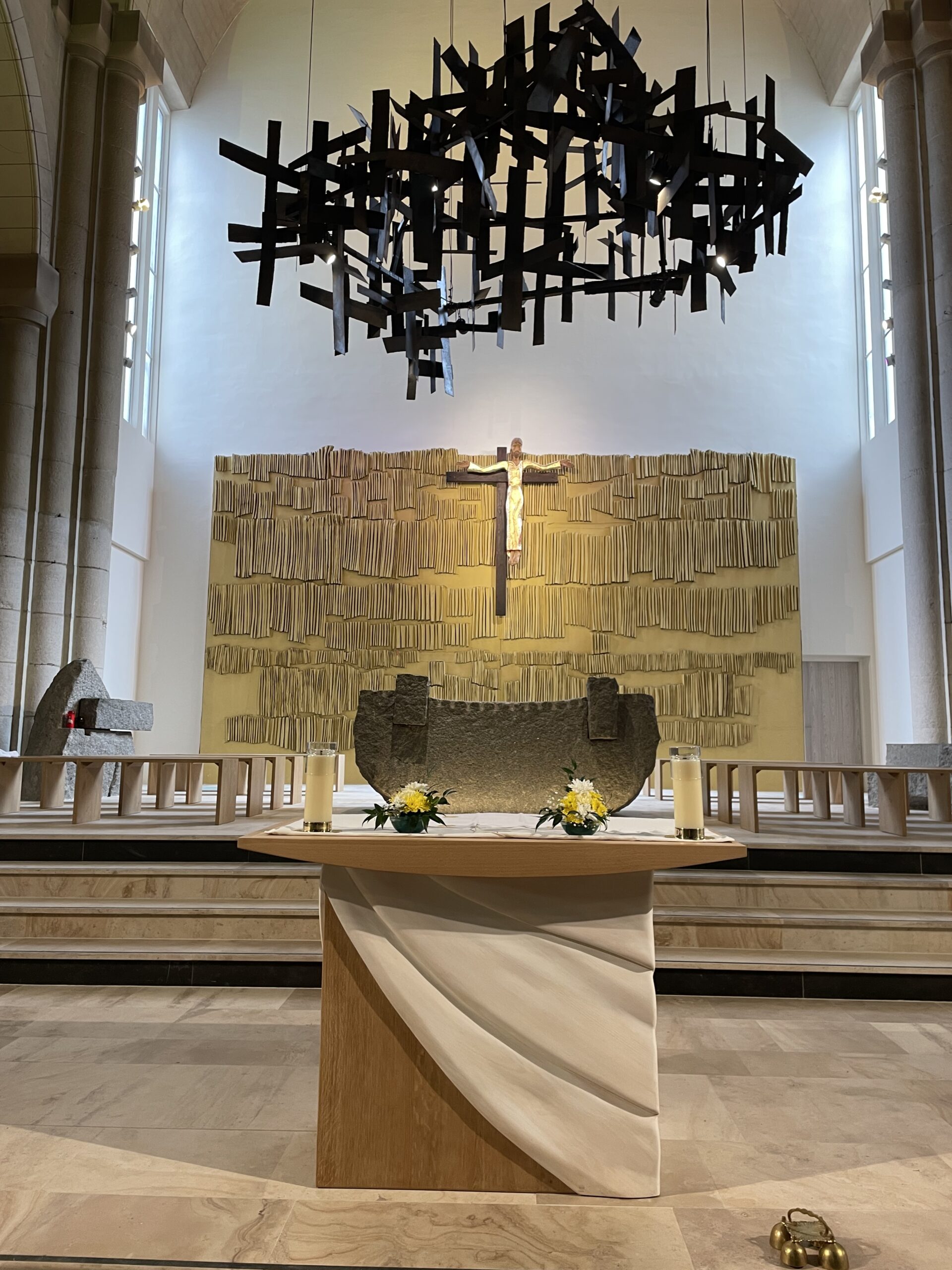
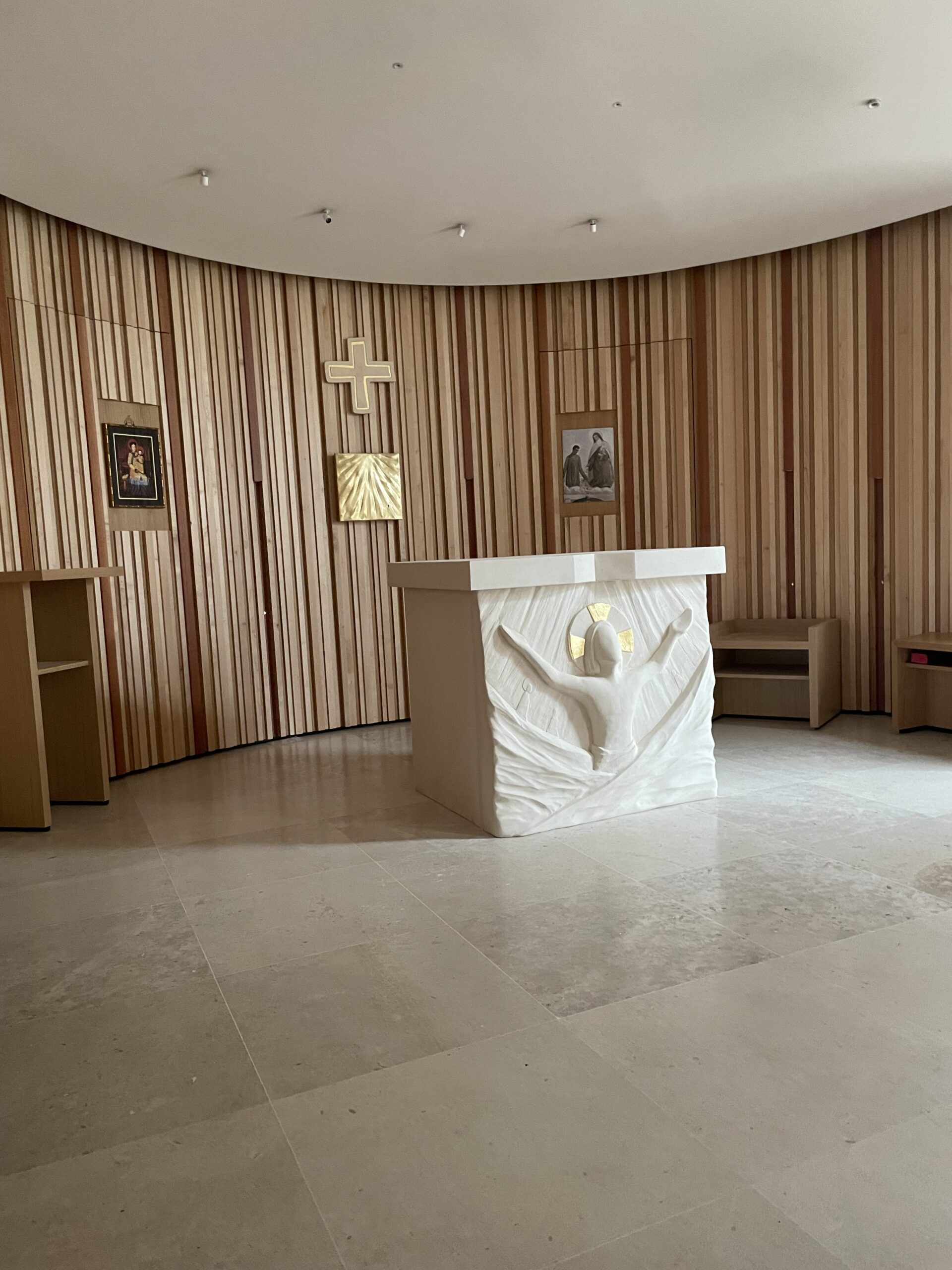
Among the works of which he is proudest is the choir of Notre-Dame de Boulogne, inaugurated in November 2019 — a project that lasted two years. Wishing to respect the history of Notre-Dame, Bruno de Maistre drew upon the existing elements. The oak used for the platform thus blends perfectly with the pulpit and stalls, while the altar, in white Carrara marble, takes up neo-Gothic elements echoing the style of the church. Within the altar lies a stone whose surface has been hand-worked to give it a raw quality, symbolising the stone of the sacrifice of Isaac by Abraham. Upon this stone is carved the figure of the Good Shepherd. ‘Jesus is the true shepherd who calls each of his sheep by name, ready to go in search of the one that is lost, and also to lay down his life for it.’
Looking upon liturgical creation with great hope, Bruno de Maistre perceives a true renewal. ‘We are emerging from a period in which liturgical design was secondary.’ Gone, then, is the era of the temporary and of poor materials. ‘Today, priests are aware that the furnishings are there to serve the liturgy; they must be beautiful, worthy of what is celebrated at Mass.’
Post a Comment cancel reply
You must be logged in to post a comment.